
Developing a Foundation for Reading
By Sally E. Shaywitz, M.D
Modified from Overcoming Dyslexia
Early good practices enrich learning and develop a foundation for later reading. Try these reading-readiness steps to engage your child. Have fun with them. Make them into a game! Activities should be short and enjoyable so your child stays involved. When your child is paying attention, learning is happening.
- Speak directly to your child. Speak slowly and clearly, pronouncing each sound very carefully; you want him to notice each word or word part you say.
- Exaggerate sounds—for example, mmmman—and have him do the same when he repeats back to you.
- Read to your child daily. Choose high-interest books. Click here for some book suggestions.
- Don’t shy away from speaking with a rich vocabulary and even making learning new words a game. It will help your child build her vocabulary, and word recognition, too.
- Play rhyming games. Example: Have her pick objects that rhyme with a common word, such as selecting a shoe for a word that rhymes with “two.”
- Make up your own jingles, rhymes, or silly stories to highlight a particular sound, or even sing a song together. Funny and visually absurd rhymes and alliterations often work best in making a sound more salient to the child. To highlight the “ssss” sound, for example, sing with her, “Sally sells seashells at the seashore.”
- Use concrete objects (blocks or coins) to represent the sounds in words. Your child should indicate how many sounds he hears in a word by the number of coins (or blocks) he places on the table. For example, for the two-phoneme word zoo, he would say each sound (“zzzz” “oo”) as he lays out first one and then a second coin.
(See illustration below.)
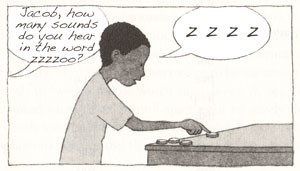
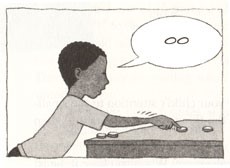
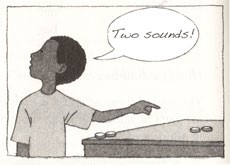
Illustration (c) Overcoming Dyslexia. Shaywitz, S.E. 2003
Helping Your Child Count Phonemes in Words
As your child pronounces each sound in a word, such as “zoo,” he puts coins in the center of the table.
Related
Suspect Dyslexia? Act Early
Early intervention and screenings for dyslexia help students get the positive support earlier.
The A to Z of Teaching Beginning Reading
To break the reading code, your child must solve the two parts of the reading puzzle: one involving spoken language, and the other involving written language.
Read More
Talking with Your Child About Dyslexia
Early on, each child needs to know that they can count on unconditional support from their parents.
Read More